Feburary 2026
In a world full of store-bought gifts and ready-made packaging, handmade creations still hold a special charm. A gift becomes far more meaningful when it carries effort, creativity, and a personal touch. That is exactly why DIY crafts continue to grow in popularity across India, especially among students, hobbyists, and craft lovers who enjoy creating something unique.
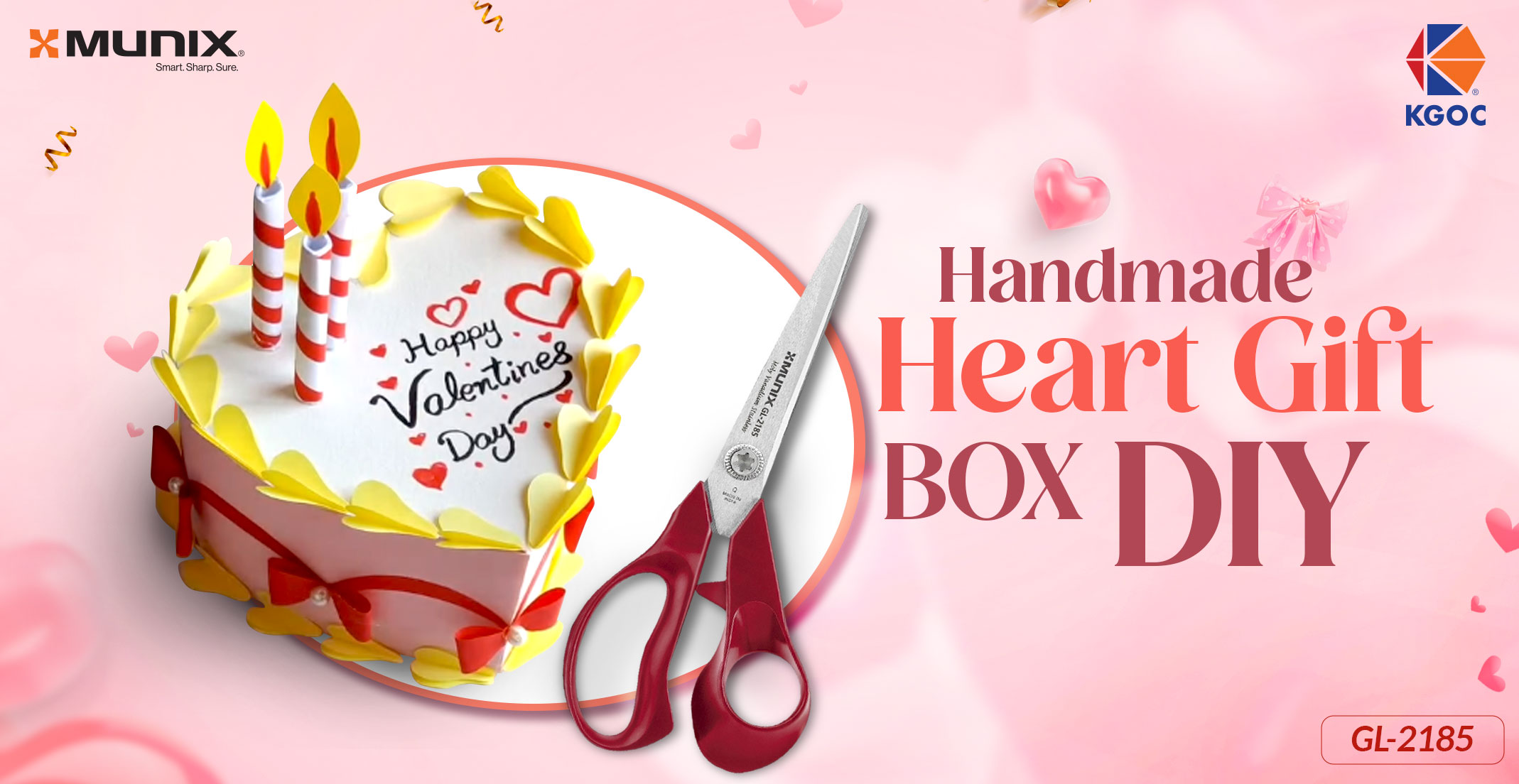
One simple yet beautiful project you can try is a DIY heart gift box. This craft transforms ordinary paper into a stunning heart-shaped box that looks like a decorative cake. It is perfect for holding chocolates, small figurines, jewelry, or handwritten notes. Whether you are creating it for a friend, family member, or special occasion, the final result always feels thoughtful and memorable.
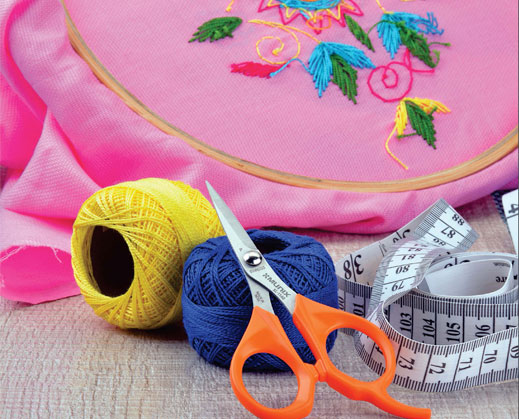
However, when it comes to paper crafts, the quality of your tools plays a big role in the outcome. Smooth curves, neat edges, and precise details depend on using the best quality scissors designed for craft work. Many crafters in India prefer reliable tools like craft scissors from Munix KGOC, known for their durability and precision.
In this guide, you will learn how to create a beautiful DIY heart gift box step by step using simple materials and the right cutting scissors. Let’s begin crafting something special.
Materials Required
Before starting the project, gather the following supplies.
- Craft paper or cardstock
- White cardstock for the base and lid
- Pink paper for the box walls
- Small sheets of red, yellow, and blue paper for decoration
- Adhesive
- Markers
- Red and black markers for writing and drawing designs
- Decorative items
- Chocolates or candies
- Small figurines
- Shredded paper filling
- Craft scissors
- Sharp cutting scissors help create smooth curves and neat shapes
- Choosing the best scissor brand in India ensures better precision and durability
Many craft enthusiasts recommend Munix KGOC scissors because they offer comfortable grip and sharp blades that make paper cutting easier.
Step-by-Step Guide to Make a DIY Heart Gift Box
1. Create the Heart Base
Start by drawing a large heart shape on white cardstock.
- Draw the heart carefully to maintain symmetry.
- Cut the shape using craft scissors for smooth curves.
- Repeat the process and create two identical hearts.
One heart will serve as the box base, while the other will be the lid.
2. Make the Box Walls
To form the sides of the box, you need a long strip of pink cardstock.
Follow these steps:
- Cut a long rectangular strip from pink paper.
- Along one side of the strip, cut small V-shaped notches.
- These small tabs allow the strip to bend easily around curves.
Now:
- Apply glue to the notched tabs.
- Carefully attach the strip around the edge of the heart base.
- Press firmly until the wall sticks properly.
Using best quality scissors ensures that the notches are neat and accurate, which helps the box assemble smoothly.
3. Personalize the Lid
The lid is where you can add creativity and personality.
Decorate the second heart cutout by:
- Writing a message like
- Made with Love
- A Special Surprise
- Drawing small hearts or simple patterns using markers.
You can also add borders or doodles to make the lid look more decorative.
4. Add Cake-Style Decorations
This step transforms the box into a beautiful cake-style gift box.
Decorative ideas include:
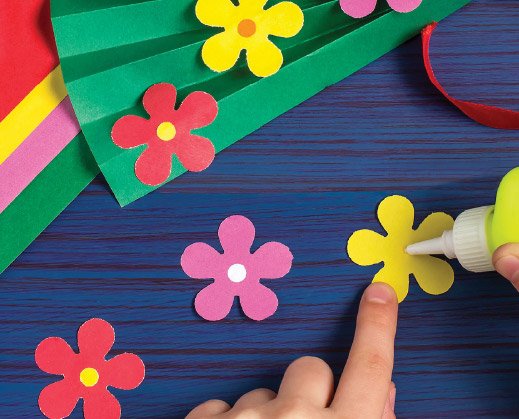
Yellow Paper Petals
- Cut small heart shapes from yellow paper.
- Fold them slightly in the center to create a 3D effect.
- Glue them along the edge of the lid.
Red Decorative Strips
- Cut wavy strips from red paper.
- Attach them around the sides of the box for extra detail.
Paper Candles
- Roll thin strips of paper to create small candles.
- Add tiny yellow paper flames.
- Glue them on top of the lid.
These small details make the gift box look creative and festive.
5. Add the Surprise Inside
Now it is time to fill your gift box.
You can add:
- Chocolates
- Small toys or figurines
- Jewelry
- Handwritten notes
- Mini gifts
First place blue shredded paper inside the box. This acts as a soft cushion for the items.
Then arrange the gifts neatly inside the box.
6. Final Assembly
Finally:
- Place the decorated lid on top of the box.
- Ensure it fits neatly over the base.
From the outside, the box looks like a decorative craft piece. But when opened, it reveals a sweet surprise inside.
Why Good Scissors Matter in Crafting
When working with paper crafts, precision makes a big difference. Poor-quality tools can create uneven edges and rough cuts.
Using reliable cutting scissors offers several advantages:
- Smooth and accurate curves
- Clean paper edges
- Better control while cutting
- Reduced hand fatigue
For craft enthusiasts in India, choosing the best scissor brand in India can improve the overall crafting experience.
Brands like Munix KGOC produce high-quality craft scissors suitable for:
- Paper crafts
- School projects
- DIY decorations
- Scissors for kids India category with safe designs
Good tools help transform simple materials into professional-looking crafts.
FAQs
1. What type of scissors are best for paper crafts?
Sharp craft scissors with stainless steel blades are best for paper crafts. They provide smooth cutting and better control for detailed shapes.
2. Which is the best scissor brand in India for crafting?
Several brands offer quality scissors, but many crafters prefer Munix KGOC for its durability, sharp blades, and comfortable grip.
3. Can kids make this DIY heart gift box?
Yes, this is a beginner-friendly craft. With supervision and safe scissors for kids in India, children can easily create this project for school activities or gifts.
4. What can I put inside a DIY heart gift box?
You can fill it with:
- Chocolates
- Jewelry
- Mini toys
- Handwritten notes
- Small souvenirs
5. Why are good scissors important for craft projects?
High-quality scissors ensure clean cuts, better precision, and easier crafting, especially when working with curved shapes like hearts.
Conclusion
Creating a DIY heart gift box is a simple yet meaningful craft that turns basic materials into a memorable handmade gift. With a little creativity, colorful paper, and the right tools, you can design a decorative box that looks beautiful and holds special surprises inside.
For the best results, always use best quality scissors designed for craft work. Reliable tools like Munix KGOC craft scissors help achieve smooth cuts, neat shapes, and professional results.
Whether you are a beginner, student, or craft enthusiast, this project is a fun way to explore creativity and make thoughtful gifts that truly stand out.
Happy crafting!
Video Link

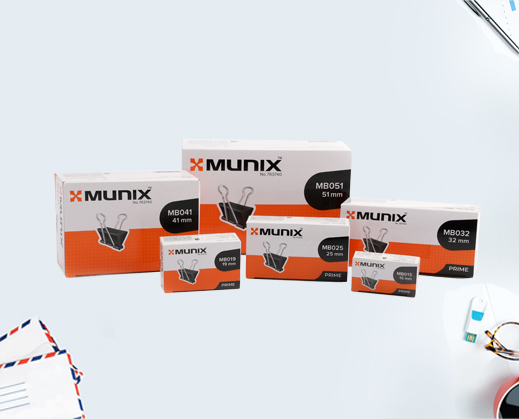
 Binder Clips